 Print This Post
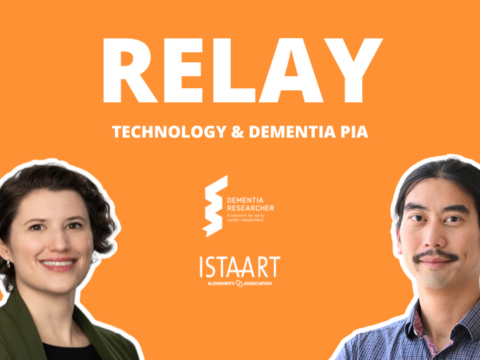
Welcome to the seventh season of the Dementia Researcher X ISTAART PIA Relay Podcast. Across six episodes, leading early career and senior researchers hand the mic from one ISTAART PIA to the next, giving you an honest, peer-to-peer tour of where dementia research is actually heading, from wearables and biomarkers to policy and trial design, in the run-up to AAIC.
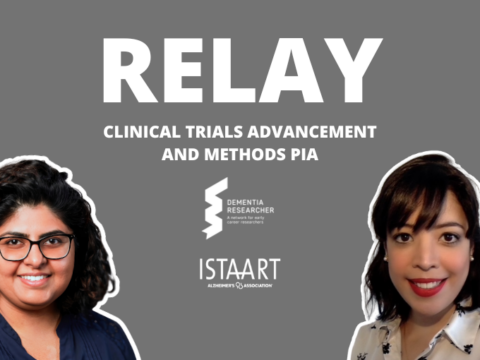
Most people with hypertension after 50 never develop dementia, so what separates those who do? That is the question driving Dr Sindhuja Tirumalai Govindarajan, a neuroimaging researcher and outgoing Chair of the ISTAART PEERs PIA, recorded as she moves from a postdoc at the University of Pennsylvania to an assistant professorship at the Karolinska Institute. With host Dr Joe Kane she explains how machine learning on tens of thousands of MRI scans can pick up subtle brain changes years before symptoms, and why scans from different scanners have to be harmonised first. The conversation then turns to PEERs itself, a PIA built not around one research area but around early career researchers everywhere, and the work of levelling opportunity across borders through local routes like Neuroscience Next, WYLD and INTERDEM Academy. Sindhuja runs through the PIA's AAIC workshops, from narrative CVs to social bingo for ECRs, and closes with practical advice on getting people involved: make the ask specific.
Takeaways
- Machine learning on large MRI datasets can detect brain changes years before any cognitive symptoms show.
- Scans from different scanners must be harmonised first, stripping out machine noise so only the biology remains.
- PEERs exists to level opportunity for early career researchers wherever they are, across every research area.
- Local routes such as Neuroscience Next, WYLD and INTERDEM Academy widen access for those who cannot get to the big conference.
- Interest among ECRs is common but clarity often is not, so make the ask specific and people will step up.
Narrator:
Hello, and welcome to season seven of the Dementia Researcher "ISTAART Relay" podcast. In this series, members of the ISTAART professional interest areas interview each other about their PIAs and the hot topics in their fields. Each guest then becomes the next episode's host, passing the conversation along from one researcher to the next. We're releasing one episode a day in the lead up to the Alzheimer's Association International Conference this year in London and online, showcasing the work of the ISTAART PIAs. Thank you for listening.
Dr Joe Kane:
Hello, everybody. Thank you very much for tuning in. I'm Dr Joe Kane. I'm a geriatric psychiatrist and a researcher, and I work at Queen's University in Belfast in Northern Ireland. I am the chair of the Lewy body dementias PIA, which is the best PIA.
Today, I'm delighted to be speaking with Sindhuja Govindarajan from the PIA to Elevate Early Career Researchers, or PEERs. Sindhuja, you're very welcome. I'm really excited to be speaking with you today. Could I please start by asking you just to tell us a bit about yourself please?
Dr Sindhuja Tirumalai Govindarajan:
Happy to. Thank you, Joe, for that introduction. My name is Sindhuja. I was until recently a postdoctoral fellow at the University of Pennsylvania. As of the recording time, I'm transitioning to an assistant professor role at Karolinska Institute in Stockholm.
I am the outgoing chair of PEERs PIA, which is decidedly the better PIA for sure.
Dr Joe Kane:
Well, agree to disagree on that I think, Sindhuja.
Dr Sindhuja Tirumalai Govindarajan:
Fair.
Dr Joe Kane:
But it's really exciting, it's really exciting that you're making such a big move over to Europe, and I'm really excited to hear about your journey there today. Before we talk about your work with the PIA, could you tell us a little bit about your own research?
Dr Sindhuja Tirumalai Govindarajan:
Sure, happy to. I work primarily with neuroimaging. I'm looking at the brain from outside using in vivo scans, and that's because I told myself at a very young age I'm scared of cutting open things. And so, it's been looking at what's happening in the brain inside the head with advanced neuroimaging scanners. In the field of dementia research, I'm pretty new.
I started in '21. In the field of dementia research, I've been interested in looking at what are the patterns of brain changes that happen years before people have cognitive symptoms. So, we hear so much about modifiable risk factors, midlife cardiovascular risk factors, and nearly half the human population has hypertension or something else beyond the age of 50. But not everybody ends up with neurological challenges that come from that. So, my interest is in finding out what exactly happens when people have some systemic risk factors and how can we measure the severity of it within an individual brain.
And so, for that, we do machine learning, which is just looking at large quantities of data. I'm talking tens of thousands of brain MRI scans and looking at subtle patterns that can be detected years before even, you know, when they present no cognitive challenges. Yeah. And the hope for that is to potentially identify participants or people who may be at increased risk as opposed to tolerating their risk factor well.
Dr Joe Kane:
Great, and what type of imaging modalities are we talking about? You mentioned MRI. Is it all structural imaging?
Dr Sindhuja Tirumalai Govindarajan:
That's great, so I do have experience in MRI with structural functional diffusion. I've done other studies in neurodegeneration before, worked with PET in the past as well. But for my work in dementia, thus far it's been primarily structural imaging and looking at vascular integrity markers using FLAIR MRI and things like that. So far in the area of dementia research, I've been focusing primarily on structural MRI, that's T1 and FLAIR imaging for who's aware of those modalities. And the primary reason for that is that with machine learning and AI, what you need are really large quantities of data that are easy to acquire.
So, you are able to scan it in pretty much any clinical scanner without necessarily going for specific, like, special sensors or specific processing paradigms. So, we've amassed a lot of structural imaging data, and it lends itself to a lot of investigations of highly specific hypotheses, I guess.
Dr Joe Kane:
That's great, so you're talking about really big datasets. Can you give us an idea of how many scans we're talking about?
Dr Sindhuja Tirumalai Govindarajan:
Sure. Currently, we're looking at a dataset which has around 65,000 participants in total with longitudinal scans. So, I think it's close to 90,000 total MRI scans. And at the University of Pennsylvania, we work on a way to harmonise images, which means different scanners are collecting different sequences. Even though they're the same label, the way they're collected may be different.
So, we need to find a way to make them comparable across different locations. And so, we have data predominantly from the US, of course the UK Biobank, some from Australia, some from Germany, some from South Korea. So, we need to, we have a way of harmonising them, which is taking out the scanner noise and retaining only what's relevant, which is biological contributions to the imaging measures.
Dr Joe Kane:
It's really interesting that, you know, you're talking about harmonisation and standardisation after the scans have been taken, which is really exciting and gives us, it always makes us think of the clinical scans and all those scans that are right there that aren't necessarily yet being leveraged in the way we could. There is a lot of buzz about AI and machine learning, and I wonder, do you engage with your participants on that? Are they able to understand the difference between, you know, machine learning that you do and the machine learning that they hear about in the news and they talk about what their relatives?
Dr Sindhuja Tirumalai Govindarajan:
That's a fantastic question. I've had an interesting background. So, I started my research into brain imaging sitting hands down at the scanner, modifying the pulse sequences, and trying to get the best picture that's robust, reproducible, and provides meaningful measures. So, I've interacted with participants of, you know, different clinical backgrounds, and I'm also aware of the different challenges that come with scanners of different types.
So I feel like I take a very cautious approach to machine learning and AI in the sense that we're not promising the world everything, a tool that fixes all, but instead I've so far been very focused on a clear clinical question and a very easy to interpret, easy to understand type of measurement that comes out of it, more interpretable than, let's say a black box, which just says, "Hey, you're going to have this in 15 years," or something like that. As far as engaging with participants now, I don't do a lot of that. I did not do a lot of that during my postdoctoral fellowship, but when my new job, in the next role that I take on, I foresee there will be some, you know, more hands on talking to people, getting more scans, things like that.
Dr Joe Kane:
Great, that sounds really exciting. And we look forward to following up on your work. Thinking more broadly about the field in general, what's really exciting you about dementia research or neuroimaging at the minute? What's really making you develop ideas and get excited about your work?
Dr Sindhuja Tirumalai Govindarajan:
I like that it's a very personal question, so I can tell you what excites me rather than what I've heard people are excited about. Personally, I believe we're starting to leverage the power of, you know, larger models. There are very phenomenal studies coming out of many labs across the world with large data. What interests the most is, or what excites me the most is we've moved kind of beyond looking at, "Hey, this is dementia, this is hippocampus that's shrinking," and going to addressing polypathology, like, different forms of dementia. And we're trying to see; can we measure this in vivo?
Can we find ways to relate what we see in structural MRI or different types of, you know, PET imaging with the different tracers? Can we look at what are the different ways in which the disease or the pathology develops over time? So, what I'm talking, in essence, it would be considered subtyping and staging kind of algorithms, which have come from the UK as well. I think that's very interesting because at the end of the day, the brain is the same. Everybody has hippocampus for the most part.
But the way people are at increased risk or increased resilience, how education provides some kind of reserve in developing dementia symptoms in how the modifiable risk factors we have every few years we're adding a couple more based on research, how the effects seem to have specific patterns. They have a specific imprint in the brain and we're able to now start mapping the trajectory of it and have these, like, diverging paths saying, "You start here, you go over there," and then start developing a core pathology and things like that. I think that's the part that excites me, which is learning as a community about how the brain is affected with different vulnerable factors as well as different progression pathologies. Yeah.
Dr Joe Kane:
There's something so cool about neuroimaging that, you know, the prospect of being able to show our patients and the public, "This is what it looks like when you've got, you know, cognitive resilience. This is what it looks like if you go down one of those paths compared to the other," and all the statistics in the world and all the encouragement and public health initiatives in the world aren't really as good as being able to show something to somebody on a brain. So that sounds really cool.
Dr Sindhuja Tirumalai Govindarajan:
I agree with the public health aspect of it. That's another thing that I'm very interested in following, which is all the lifestyle intervention trials that have been coming out recently, looking at modifications over decades if possible and seeing how ageing is so heterogeneous and how with certain checks and balances along the way, we can potentially have people have long, fulfilling lives.
Dr Joe Kane:
It's amazing. And you're here, I suppose, not because of your neuroimaging expertise, but because of your role in PEERs. What are your colleagues and what are your PEERs talking about in your PEER? What's the big issue and what are the big challenges that face them at the moment?
Dr Sindhuja Tirumalai Govindarajan:
That's great. I think before getting to that question, I will give you an overview of what PEERs PIA does. As the name suggests, it's for elevating early career researchers and that's our entire paradigm, which is offering programming support, professional development opportunities for early career researchers. Not only from a specific area of research, but across the board of dementia research. That's our primary goal.
So that includes advocacy programmes. We can talk more about the specific programming that we do, but the biggest challenges we would like to address are how unequal opportunities are, depending on where you are from, depending on what area of research you are from and whether you have the mobility to be able to reach across borders. So, we try to bridge some of these through virtual programming. But Alzheimer's Association also has some ways of having local programming, like the Neuroscience Next Conference that happens that's free for online registration that happens in different locations.
So, people who are not generally attending the annual international conference either through funding reasons, visa concerns, any number of possible reasons that could be preventing them from travelling, they're able to go to a local conference and present, participate, and learn more. I mean, and we try our best to interface with the local communities and promote them as well as offer programming from behind the Zoom camera.
Dr Joe Kane:
And do you get the sense that's something that's, you mentioned borders as being really significant and very significant obstacle. Do you think that's something that's becoming better or worse or staying the same in terms of how we look at research globally?
Dr Sindhuja Tirumalai Govindarajan:
I think it is improving across many places, but there is still work to do everywhere except Antarctica, and that is our whole goal. So, the working groups, we have them across the different continents, and we have representatives from these continents that could be senior or mid career researchers who are offering the mentorship. And we have junior researchers taking on the role of the committee lead or the special interest group chair, and they bring us this kind of concerns that are most prevalent in their location. How can we bridge, how can we tap into resources that are available in the Western world and how can we pass this on as mentorship meetings or as grants related programming? That's what we do.
With that, what we've observed is in some of the continents, there already exist a good network. There is already a critical mass of researchers pursuing this and awareness of dementia research as a career possibility. But in a couple of places, it's not very common. So, finding members interested in a working group and sustaining them through leadership transitions has been a challenge that we face. But on the bright side, the kind of things we do is we leverage our working group members and connect people to local organisations.
I'll give you an example. So, in South America there is an organisation coming up as the World Young Leaders in Dementia or WYLD. It's led by people from there. And so, PEERs PIA interfaces with them quite a bit to offer programming that promotes funding opportunities or mentorship opportunities to people who may need it. In Europe, we interface with what's called the INTERDEM Academy.
And our working group members from PEERs PIA also have a working role there. And so, we're able to offer more programming to that. But in some other continents, for example, as you can imagine, I'm from India and Asia is a huge continent and we try to have one representative, but that doesn't cover the breadth of opportunities that may be available. So, what we end up having is a rotation of people from different countries within the continent, and being able to offer programming for the duration of their tenure, offer programming relevant to the country they are in. That's how we operate.
Dr Joe Kane:
That's really cool, 'cause it sounds like a really democratic, inclusive process that really makes sure you reach all four corners of the globe. And what's really interesting as well is that I find that working with PIA to be a good kind of primer in the leadership anyway, so not only are you directing people towards leadership things, but being involved in the PIA itself is nurturing leadership skills. That's really clear. That's been really helpful to set the scene for what I want to talk about next, which is get into a little bit more detail about the work of the PIA itself. Could you give me some specific examples of how the PIA has supported the field that you work in?
Dr Sindhuja Tirumalai Govindarajan:
Sure. As with other PIAs, we have specific types of programming that I briefly glossed on. We have webinars where we try to partner with individual scientific PIAs. As I mentioned before, our PIA doesn't have strict borders on what area of research people are from. This is for all early career researchers, all parts of the world.
So, we have interfaces with specific research areas where we provide webinars that are geared towards ECRs. We promote, like, we promote the PIA that we are collaborating with along with promoting the ECR within the PIA. So, we provide opportunities for early career researchers to present their work in a global stage. So that's one way we've connected with the science. Another way we do that is also what we call neuroscience mentoring clubs.
These are off the record, not recorded meetings where a more senior person, either could be from a continental group representative or it could be someone very general, will share their career trajectory, including what kind of tools and resources they couldn't find earlier, but what they would be able to support new researchers with. And that's where ECRs from other parts of the world could join in, ask questions that could be related to, "How do I find grants?" or it could be related to, "How do I train on this specific skill, this specific technical component?" And they have been very fruitful. We've had closed room discussions like that.
In addition, we also collaborate with the ISTAART ambassadors to provide programming in person at AAIC, and this could be workshops on specific skills, like, how do you use AI in research kind of a thing. Or we also do regular workshops on how to build your writing portfolio, how to manage, how to do project management, or in this upcoming year, I'm sure we'll have some time to go over specific programmes, but we have how to give an elevator pitch, so we kind of get people ready for the conference and ready for their career. And somehow that translates back into how they're able to advocate for themselves and move up in dementia science.
Dr Joe Kane:
That sounds really great, sounds really practically focused. And also, it's great to see you shout out some of the ambassadors, the ISTAART ambassadors who just bring a real enthusiasm, and it's great that you're providing them with a platform to look at their next steps and to bring them into the community. So that sounds really exciting. Our next question I want to ask you about your own journey. So how did you end up getting involved in this PIA?
Dr Sindhuja Tirumalai Govindarajan:
I think I have to give credit to the PIA itself and Adam Smith, our host. My first in person AAIC was in 2022 and I was checking out these lunchtime skills workshops. I think that's what they're called now, but they had different names in the past. I was mind blown. I was mind blown at how it was organised and how it removed the frills of having a fantastic research idea, hypothesis, the funds to do the science and then present it and have strong results.
No, this was all about learning how to be a scientist or how to be a researcher more generally. I remember one of the first workshops I went to was, what does neuroimaging actually tell you? Like, what does the different fields actually tell you? And we had these live demonstrations and people had a chance to do a trivia quiz kind of a thing. It was a learning journey packed into a very tight workshop that had practical, practical messages.
That's when I decided, "I'm joining this PIA." That's how I got involved. And I was very fortunate that the position was open for an election during the off season, not during the cyclical season. And I put my hat in the ring and I got elected. I think that's how I got into it. It's been very rewarding.
I get to move across research areas. It feels like I have a ticket to go to any field I want and I get to hear about the different research topics that our members work on, as well as how science is done in different institutions, in different countries and things like that. It feels like I have a full access pass, and I'm very grateful for this opportunity.
Dr Joe Kane:
Your enthusiasm really, really comes through, and for anyone who's listening to this, you're just beaming talking about being involved in the PIA, so that's fantastic. So, given everything you've said and the great ideas and the great mechanisms that brought you into the PIA, could you tell us a bit about what you've got planned for AAIC?
Dr Sindhuja Tirumalai Govindarajan:
Absolutely. The first thing I've got planned is I am not going, unfortunately. I will be moving between countries, and hopping onto a third country was not in my agenda for this summer, but we have some great programming. Our executive committee is made of phenomenal, phenomenally talented, and motivated members, and we have several programming opportunities. Let me open up that so I can give you the exact details.
So, we have, before the conference starts on Friday, there are two workshops. One is on leadership skills and development workshop for emerging scientists, which we partnered with AWARE, which is Alliance for Women Researchers in Dementia. So, we partnered with them for a leadership workshop. And in the afternoon on Friday, July 10th, we have a workshop on engaging people with lived experience in dementia research. Again, this is a collaboration with the partnering PIA who primarily work on how to engage with the caregivers and partners who make dementia research possible.
On Saturday, which is considered PIA Day, at very early in the morning at 8:30 we have a skills kind of conversation about how to identify your 60 second research story, how you can own your expertise. And this is great because you go there and prepare, practise your research speech, your elevator pitch, and you're prepared for the rest of the conference. And on Sunday, which is the first day of the conference, we have social support and bingo, social bingo, for early and mid career researchers.
These are easy ways to get to know people in your own career stage and, you know, perhaps mid career as well, build your network that's outside of your usual pathways of finding network, and sometimes we get great topics that are challenges among different groups of people and we bring that back to PIA and discuss how we can offer programming in the future. So that's a great place to meet with our executive committee as well as meet new people and form your own circle of friends for this conference. And then during the conference, Monday through Wednesday, every afternoon at lunchtime, there are skills workshops, and PEERs PIA is partnering and collaborating with other PIAs for at least one workshop every day.
So, on Monday at lunchtime, we have collaborating with people with lived experience in dementia research, again, with partnering PIA. On Tuesday we have a workshop on crafting your narrative CV. And this I thought was very important because a lot of the institutions funding partners are moving away from a written CV which just lists your accomplishments and your papers into a more narrative one where you highlight how this contributes to science in general. So, we have that workshop on Tuesday in partnership with the neuroimaging PIA. And on Wednesday we have a PEERs PIA only skills workshop on how to establish an effective writing routine.
And to me, one of the highlights for all these workshops is how collaborative they are, not only with ECs and other groups, but some of these are being led by our members. So, people who are interested in gaining leadership experience or expanding their skill on a specific topic of interest could absolutely get involved and build on their leadership skills.
Dr Joe Kane:
That all sounds really interesting. You've produced some really exciting, engaging ideas as a means of engaging with your PIA. From the perspective of someone who, both in PIA and locally, trying to engage early career researchers, what do you think is the most common pitfall that organisations fall into when they're trying to go about engaging that group?
Dr Sindhuja Tirumalai Govindarajan:
That's a great question. I can speak of an example that we've frequently faced in the last few years of my time here. I would say a lot of the times, organising groups like the executive committee, including our own, we've shouldered all of the organisational duties on ourselves, thinking, "We wanted to be part of this group, so it's up to us to make it happen." But in the more recent years what I've noticed is that our members are very interested, they're interested in participating, they're interested in contributing and organising things as well. But often, more often than not, what we hear is that you're not sure how to get started, where to get involved. Some of the options we've tried are having specific examples of the kind of support we need.
We could say, "Hello, we're planning this event, we're looking for people who can host and looking for people who can monitor chats on the Zoom question and answers, Q&A," and if we have some specific requests and we are able to provide the time, that's easy. That's an easy way to ask people to join because the asks are clear and they're able to contribute. And another way we've done, especially some of the skills workshops we've done recently with collaborative mindset, is reaching out, reaching out to our network. Like I said, I'm very fortunate that my area of research has perhaps one of the largest PIAs, neuroimaging PIA, and I have this full access pass to other PIAs as well.
So, I'm able to, say, call out a friend of mine or a colleague of mine or someone whose paper I really admire, call them, and say, "Hey, we're interested in putting this together. Would you like to contribute? These are the expectations," or "These are some of the ideas we have," and then they bring own ideas. So, I think in my experience, the quickest answer would be reach out. A lot of the times there is interest, but not clarity, and sometimes there are pitfalls as well.
In some cases, with our continental groups, we found that we operate on a timescale, not just a time zone, but a timescale that cannot be met by people in a different environment. And so, we've had to take on the lead, if necessary, but more than anything, we've specifically tried to involve members and provide support behind the scenes in how they can organise the different events. Yeah.
Dr Joe Kane:
Thank you. That sounds like great advice. So being really specific about what you're asking people to do is definitely something I'm going to reflect on.
Dr Sindhuja Tirumalai Govindarajan:
If I may add one more thing to that, recently, because AAIC is in London and over the last few months, I believe perhaps February or March, we requested that ISTAART reach out to all PEERs members in UK and ask if they're definitely attending the conference, can they participate, can they help us organise? I believe it was UK and Europe, and we did have a lot of members contributing ideas and how they would, how they feel prepared to be part of a programme that we plan to have. And it was so good that we received perhaps more than a dozen responses and we've had to turn some of them, like, turn some of them away or ask if they would do an online seminar instead. So that's definitely been successful in our current, like, or immediate AAIC programming.
Dr Joe Kane:
Great, so there's loads of interesting things you guys have lined up at AAIC and beyond, so it's really exciting to hear about both your work and the work of the PIA. We would love to keep chatting, but we're constrained by time. So, it's time to end today's podcast. I want to thank you, Sindhuja, and I want to welcome you to Europe. I want to wish you the very best for what I know is a big move ahead for you.
So, thank you very much for joining us.
Dr Sindhuja Tirumalai Govindarajan:
Thank you, Joe. I'm very glad to be here. And for anyone interested, please look up PEERs PIA on the ISTAART website and you'll be able to find us and reach out to all of EC. You're also able to email istaart@alz.org. You can find information of all of this on the Alzheimer's Association website.
Thank you.
Dr Joe Kane:
Thank you.
Narrator:
You have been listening to the "Relay" podcast, delivered as a collaboration between Dementia Researcher and ISTAART. This podcast is made at University College London with generous funding from the NIHR, Race against Dementia, Alzheimer's Association, Alzheimer's Research UK, and the Alzheimer's Society. Please like and subscribe and share your thoughts in the comments.
If you would like to join a panel or record a podcast on your own area of research, complete our show form. You can subscribe to our podcasts through your favourite podcast app, just search for 'Dementia Researcher' or follow the links in the footer of this page.
Did you know... all of our blogs are also available as podcasts? Find them here on Apple, and here on Spotify
The views and opinions expressed by the host and guests in this podcast represent those of the guests and do not necessarily reflect those of UCL, Dementia Researcher or its funders.
Join our Supporter Programme and subscribe to our channel in YouTube or in Apple Podcasts for exclusive access to bonus shows, and to gain early access to our recordings.
Share your thoughts on this topic in the comments below.
 Dementia Researcher
 Harriet Greene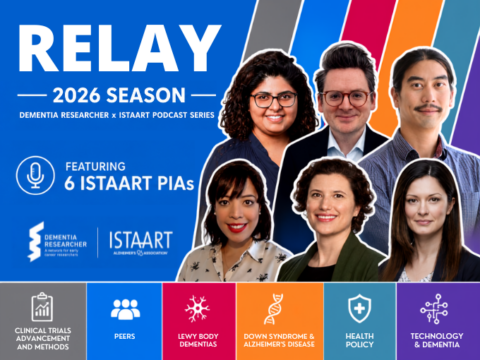
 Nature Careers Blog